
Click on thumbnail image to get a better view.

 A late Iron Age Silver unit of Cunobelinus. This king ruled the Catuvellauni Celtic Tribe after suceeding his father Tasciovanus between AD9 and AD40. Winged horse on obverse, Romanized figure seated on reverse. |
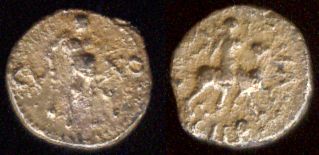 Another silver unit of Cunobelin. Obverse, figure standing holding club and lionskin, inscription CVNO intersected. Reverse Female rider facing right, inscription TASCIOVA. Circa AD9-AD40. M.239; V.2061; BMC1884-85. (224) |
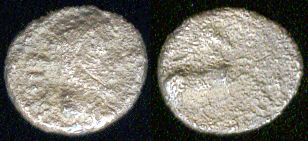 If you find Celtic coins in my area they are usually attributed to Cunobelin and this example is no exception. Dates for this coin are between AD9 and AD40. |
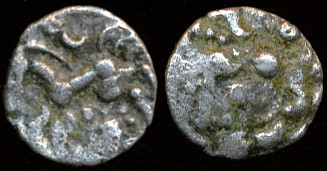 This Celtic Silver Stater was a very nice find made with the Oxford Blues MDC in October 2014. Recorded with local FLO and waiting to being identified. |

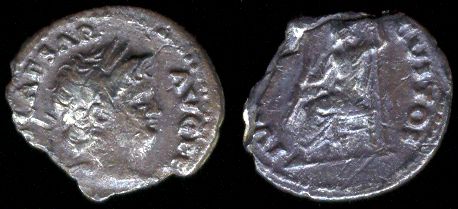 A Silver Denarius of Emperor Nero AD54 - AD68, with Jupiter seated on reverse. |
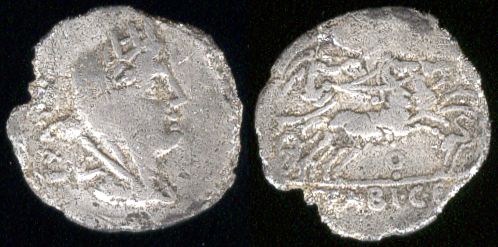 Possibly my oldest coin to date. Republican denarii such as this probably came to Britain as a result of trade with early Rome by local Celtic tribes around the 1st Century BC. |
 Superb Denarius of Vibia Sabina, 83 – 136AD. Sabina was the wife of Hadrian and awarded the title of Augusta in 128. They had an unhappy marriage, Sabina eventually hated Hadrian who went to some lengths to mock her with his numerous affairs. |
 Valens 364 – 367AD “Restorer of the Country” Siliqua. Obverse, DN VALEN S PF AVG. Reverse, RESTITV TOR REIP. Scarce in any grade and this one's almost mint. |
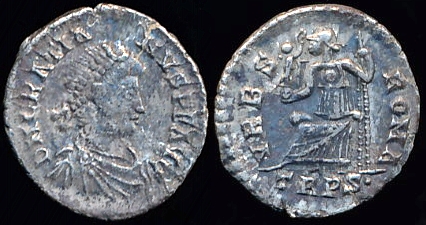 Gratian Siliqua, Trier mint, 367 - 368 AD. Urbs Roma seated on reverse. |
 Constantius II, Siliqua. 253 - 260 AD. DN CONSTAN-TIVS PF AVG, pearl-diademed, draped, cuirassed bust right / VOTIS XXX MVLTIS XXXX within wreath, PCON. |
 Marcus Aurelius Silver Denarius. Rome, AD 165. M ANTONINVS AVG ARMENIACVS, laureate head right, P M TR P XIX IMP III COS III, Roma seated left, holding Palladium and sceptre. |
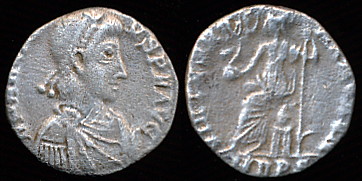 Roman Silver siliqua of Arcadius. AD 383-408. Mediolanum (Milan) mint. Struck AD 393-394. Obverse pearl-diademed, draped, and cuirassed bust right. Reverse Roma seated left on cuirass, holding Victory on globe and inverted spear; MDPS. |
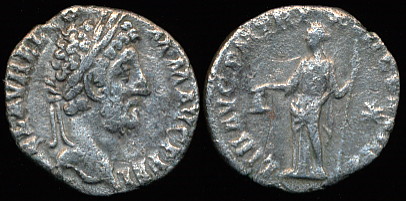 Unidentified Silver Denarius, probably Antoninus Pius AD 138 – 161. More Information needed. |
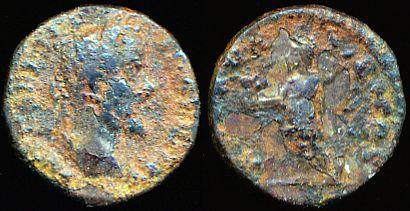 Antoninus Pius Denarius with crusty surface deposits. |
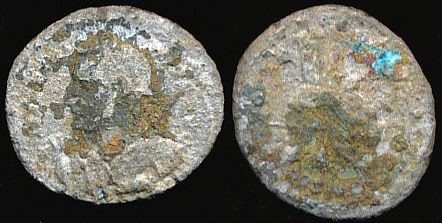 Unidentified Roman coin, likely to be second or third century. |
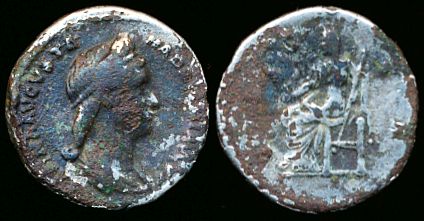 Another Denarius of Sabina 83 – 136AD. |

 A hammered Penny of Edward I 1272-1307 minted in Canterbury. (Obverse reads, EDW R ANGL DNS HYB, Edward King of England Lord of Ireland. Reverse reads, CIVI TAS CAN TOR, City of Canterbury.) |
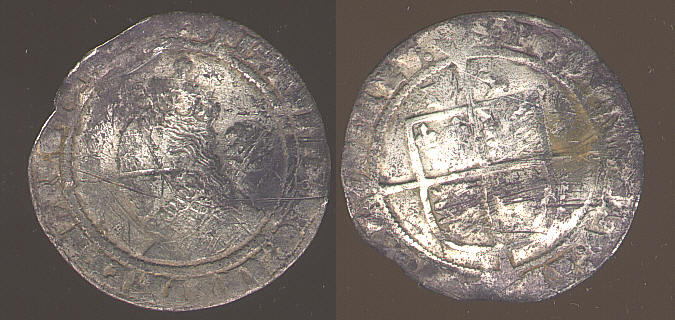 A hammered Sixpence of Elizabeth I. (Eglantine mint mark 1573-1577, London mint.) |
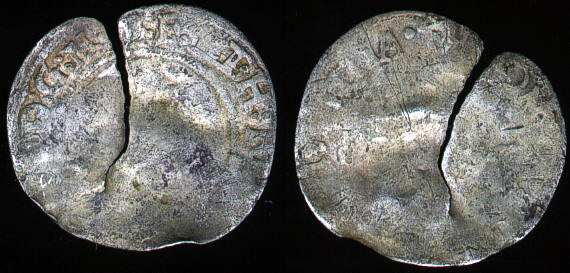 A hammered Half Groat of Elizabeth I. Probably a late one, 5th or 6th issue. What a shame the flan is so badly cracked. |
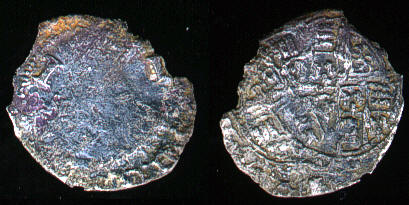 This is the smallest hammered I have ever seen. It is difficult to tell who it is but after much study I have found it to be a penny of Charles I. (Harp mint mark, London 1632-1633.) |
 This is a very unusual coin from Luxemburg modelled on the English penny. Called an Esterlin or Sterling this coin was struck under John The Blind 1309-1346. You can clearly see that the obverse legend begins with an I for IOHANERS instead of the more usual EDW for Edward. This is quite a rare coin and I will probably never find another like it! |
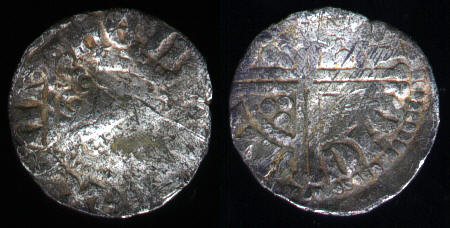 A long cross Penny of Henry III 1216-1272 (Sceptre on left, class 5a or 5b. Obverse reads, HENRICUS REX III, King Henry III. Reverse illegible. |
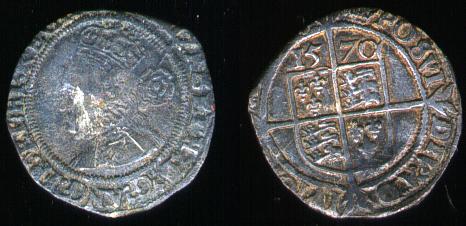 This is one of the best hammered I have ever seen! Elizabeth I Threepence, date 1570, mint mark Coronet. (Obverse reads, ELIZABETH D G ANG FR ET HIB REGINA, Elizabeth by the grace of God Queen of England France and Ireland. Reverse reads, POSUI DEU ADIUTOREM MEU, I have made God my helper.) |
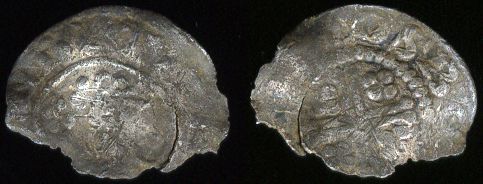 The remains of the hammered Penny above dates between 1180 and 1199, Henry II and Richard I. The inscription OSBE visible on the reverse for OSBER (OSBERN) gives the vital clue when identifying this coin. |
.jpg) Another Penny of Edward I, struck after the recoinage of 1280 in London. (Reverse reads, CIVI TAS LON DON, City of London.) |
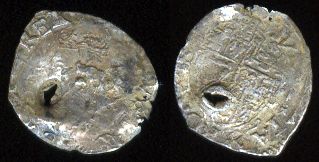 A Penny of Charles I. REX just visible on obverse, 1625-1647. |
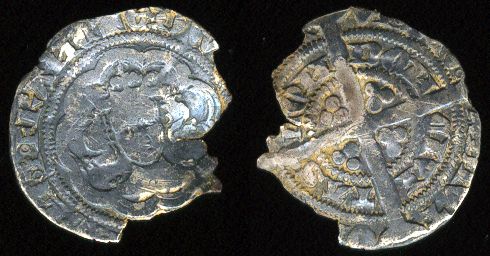 Dating to the mid 1300s this coin is the remains of an Edward III Half Groat. Mintmark, Cross Pattee: 1334-1351, 1369, 1377.(Obverse reads, EDWARDUS REX ANGL F FRANC, Edward King of England and France. Reverse reads, POSVI DEUM ADIVTOREM MEUM (CIVITAS LONDON), I have made God my helper (City of London).) |
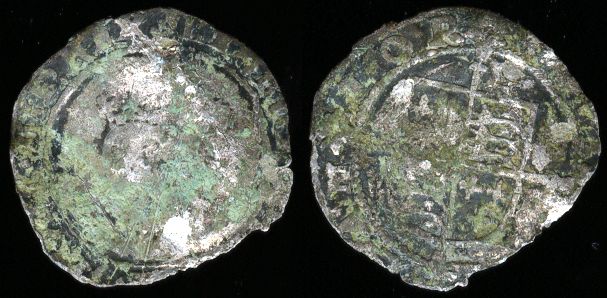 A Henry VIII Groat from the Posthumous Coinage 1547 to 1551. The Reverse reads CIVITAS CANTOR for City of Canterbury. |
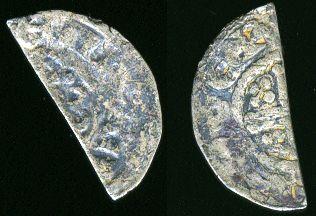 Nice to find an example of an early short cross cut half, Half Penny. The Moneyer is Roger and the mint Canterbury. Dates for this one are 1216 to 1247, king Henry III. |
 This is an unusual little coin with the value of Three Half Pennies. I have never seen one of these in all my years of coin collecting so I was very pleased when I found this one. (Elizabeth I 1579, minted in London.) |
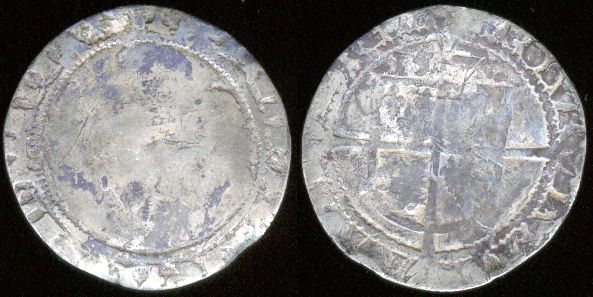 Always nice to find a hammered Sixpence, this one’s dated 1575 and was minded in London. |
 I currently believe this penny to be from the reign of either Edward IV or Henry VI. |
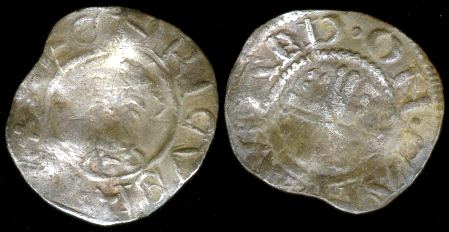 A nice short cross penny of Richard I (Richard the Lion Heart) 1189 to 1199, Class 4B, ULARD ON CANT (Ulard of Canterbury). |
 This little coin is an Edward I Half Penny 1280 to 1307 and probably minted in London. |
 Thanks to The British Museum for identifying this coin as a Henry II Penny issued by Raul in London between 1182 and 1185. |
.jpg) Edward I Long Cross Penny (Reverse reads, CIVI TAS LON DON, City of London.) |
.jpg) Edward I Long Cross Penny this time from the York mint. (Reverse reads, CIVI TAS EBO RACI, City of York.) |
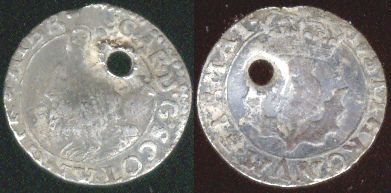 While out on a club dig I found my first Scottish hammered. 20 Pence, Charles I 1625 – 1649. |
.jpg) Here’s one of the best hammered I’ve found so far. Elizabeth I Half Groat, mint mark Escallop, Tower Mint London, 1584 – 1586. (Obverse reads, E D G ROSA SINE SPINA, Elizabeth by the Grace of God a rose without a thorn. Reverse reads, CIVITAS LONDON, City of London.) |
.jpg) Here we have a short cross cut Half Penny. I currently believe it belongs to the reign of Henry III but it’s difficult to know for sure with a chunk missing. |
 My best Lizy Sixpence so far. Tower Mint, Eglantine mint mark and the date of 1576. |
.jpg) An early short cross cut half, Half Penny. C. 1180-1247. |
 Currently I believe this medieval Penny is attributed to either Henry V or VI. 1413 - 1461 (70-71) |
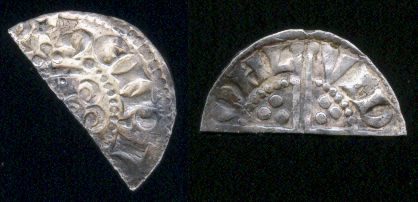 Stunning Henry III voided long cross cut Penny. The reverse legend reads ON LVND for London. Dates for the voided long cross issue are 1247 to 1272. |
 A cut Penny of Henry II, 1180-1189. I believe the mint to be Winchester (WINC). |
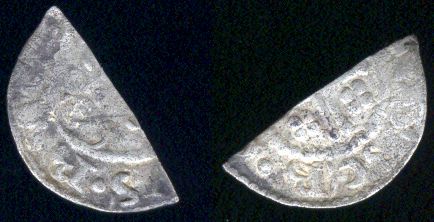 Another short cross cut Penny, dates for this one are from Henry II, 1180 to Henry III ,1247. |
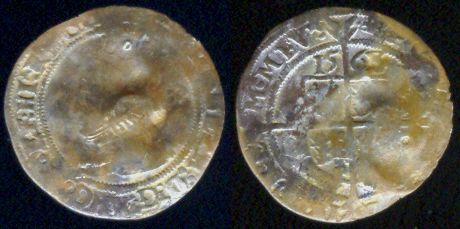 A worn Threepence of Elizabeth I. Unfortunately the mintmark is unclear but the date of 1563 is still visible. |
.jpg) An almost perfect Penny of Edward I, 1272-1307. The reverse inscription is attributed to London. |
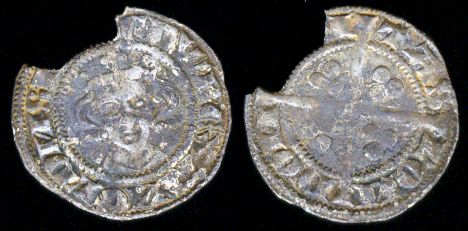 Edward I Penny, Class 1C, 1279. Obverse, EDW REX ANGL DNS HYB, Edward King of England Lord of Ireland. Reverse, CIVI TAS LON DON, City of London. |
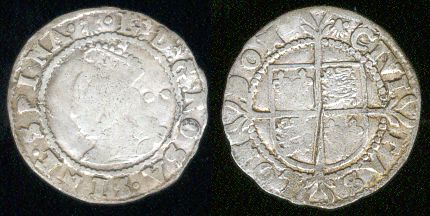 Superb condition Half Groat of Elizabeth I, Escallop 1584 - 1586. (Obverse, E D G ROSA SINE SPINA, Elizabeth by the Grace of God a rose without a thorn. Reverse, CIVITAS LONDON, City of London.) |
 My first James I hammered. Half Groat, obverse, I D G ROSA SINE SPINA, James by the Grace of God a rose without a thorn. Reverse, TUETUR UNITA DEUS, May God guard these United Kingdoms. |
.jpg) I can’t say much about this coin except it’s a short cross and dates between 1180 and 1247. |
.jpg) Occasionally I find voided long cross coins. The cross on the reverse was extended in 1247 from the short cross design to help combat illegal clipping. Although a good idea at the time ultimately it failed and thus coins continued to be clipped and passed on underweight. This example is Henry III, NICOLE ON LVND for Nicholas of London. |
.jpg) Another Voided long cross coin of Henry III. In early times the Penny was the only denomination in circulation so the practice of cutting coins in to halves and quarters was used for small change. This coin therefore serves as a cut quarter or Farthing. |
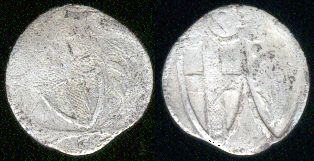 This coin is the first example I have found from the Commonwealth. During the time 1649 to 1660 when this Penny was struck the Puritan movement was at it’s height and Oliver Cromwell ruled as Lord Protector of England. |
 My first round Farthing of Edward I. These coins are very hard to find, it's about half the size of my little fingernail! |
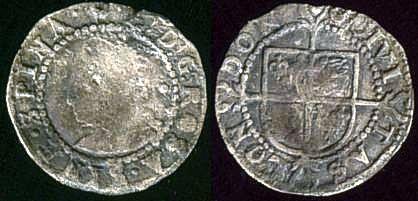 Nice Half Groat of Elizabeth I. The mint mark “0” denotes 1600 and London. |
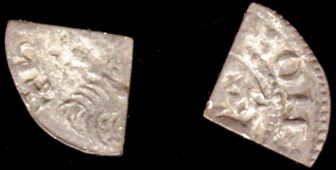 Henry II cut Farthing from the Tealby coinage, 1158 – 1180. My oldest and rarest hammered coin to date. |
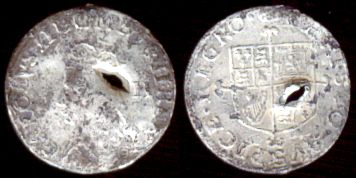 Scarce 1660/2 Charles II hammered Half Groat. A few years after Charles II was invited back to England hammered coinage was abandoned. However coins of the era continued to circulate along side milled coinage for several years until they were retired. The practice of piercing was used to take a coin out of circulation before recycling. |
.jpg) Henry III cut Half Penny, voided long cross coinage, 1247 – 1272. |
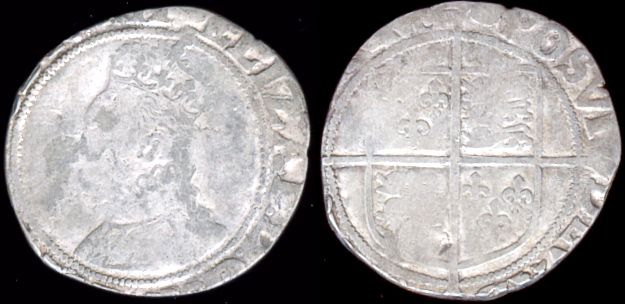 Badly clipped Shilling of Elizabeth I, only the centre remains! Sir Isaac Newton successfully address the problem of clipping by introducing toothed edge designs to coins when he became master of the mint. A feature still employed on modern 5p and 10p coins which survives to this day. |
.jpg) Cut Half Penny of Henry III. |
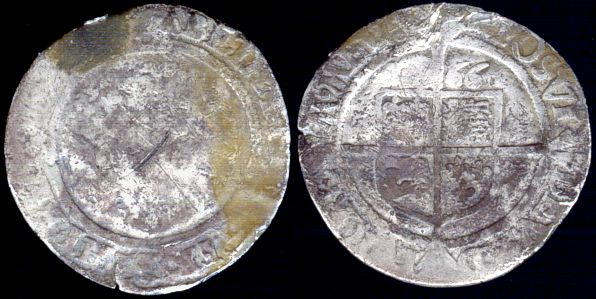 A worn Sixpence of Elizabeth I dated 1566. |
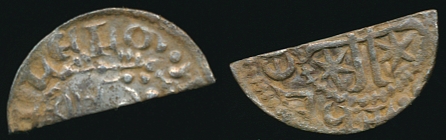 Rare William the Lion Scottish cut Half Penny, 1165 – 1214. |
.jpg) A Shortcross cut Half Penny. |
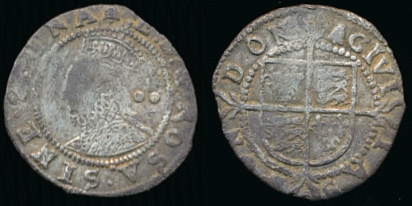 Good condition Elizabeth I Half Groat, bell mintmark for London, 1582 – 1583. |
 Small clipped Half Groat of Charles I. |
.jpg) Edward I Penny, CIVITAS LONDON. |
.jpg) Edward I Penny, CIVITAS LONDON. |
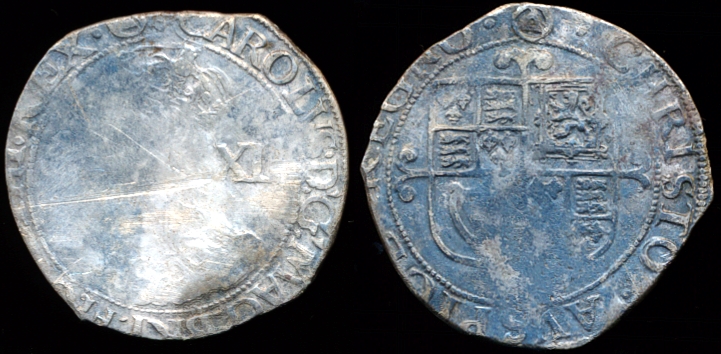 Nice Charles I Shilling, mintmark triangle in a circle, Tower mint, 1642 - 1643. |
.jpg) Another Edward I Penny, this time from the Durham mint, CIVITAS DVREME. |
.jpg) Good condition Edward I Penny, CIVITAS LONDON. |
 An Edward II Penny from the Bury St. Edmunds mint. VILL SCI EDMVNDI, 1307 – 1327. |
.jpg) Henry III Voided Long Cross Penny. |
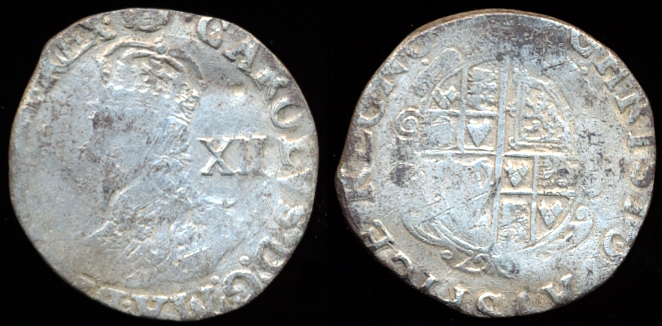 A Clipped Charles I Shilling, mintmark tun, Tower mint, 1636 – 1638. |
 Edward IV Half Penny, mintmark crown, Bristol, Canterbury, London or York, 1467 – 1468. |
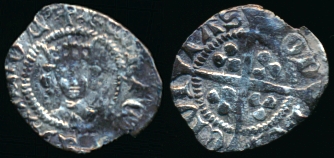 Very hard to find Henry VI Half Penny, mintmark plain cross, Bristol, Calais or London, 1422 – 1460. |
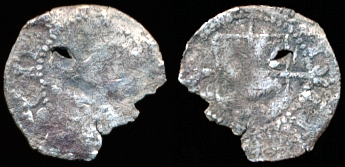 A battered and bruised Tudor Penny. |
 Holed Charles II Silver Penny, 1660 – 1662. |
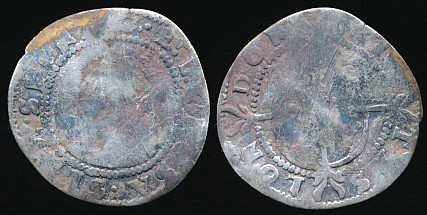 Worn Elizabeth I Half Groat. |
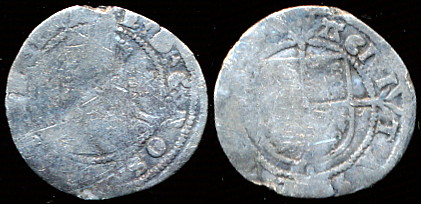 Elizabeth I Half Groat, mintmark A for the Tower mint 1582 – 1584. |
 Worn Charles I Half Groat, mintmark Triangle, Tower mint 1639 – 1640. |
 Elizabeth I Silver Half Penny. Sixth issue 1592 – 1595, mint mark Tun, Spink 2581. |
 Clipped Charles I Sixpence, mint mark Pellet for the Oxford or Shrewsbury mint. Dates for this coin 1642 – 1646. |
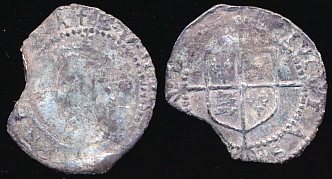 Elizabeth I Penny, mintmark Latin Cross, Tower mint, 1580 – 1581. |
 My first Richard II coin. Silver Half Penny, 1377 – 1399. |
 Charles I Half Groat, mintmark Star, Tower mint 1641. |
 Commonwealth hammered silver Half Groat. These coins are attributed to Oliver Cromwell and the English Protectorate. 1649 – 1660. |
.jpg) Tiny clipped Farthing of King Edward I from the recoinage 1280 - 1307. |
.jpg) Edward I Penny in good condition. (Legends: EDW R ANGL DNS HYB, Edward King of England Lord of Ireland. / CIVI TAS LON DON, City of London.) |
.jpg) Henry III Penny, Gilbert of Canterbury (GIL BER TON CAN) |
 Rare Half Penny, Henry VI Restoration 1470-1471, mintmark Restoration Cross, London mint. |
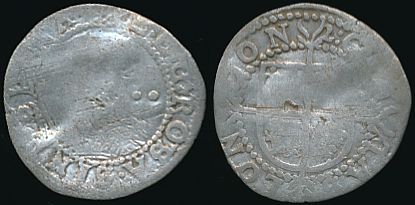 Elizabeth I Half Groat, mintmark 2 for the Tower mint, 1602. |
.jpg) Henry III cut Half Penny, Stephen of Bury St. Edmunds, uncertain (E N TED) |
.jpg) Damaged Edward I Penny, London mint. |
.jpg) Edward I Penny, London mint. |
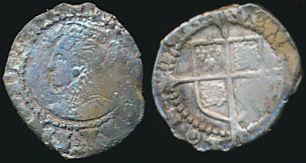 Clipped penny of Elizabeth I. |
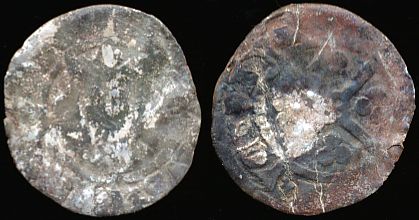 Edward IV Penny 1461 – 1470, 1471 – 1483. |
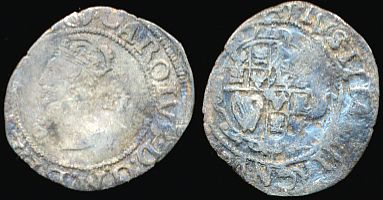 Half Groat of Charles I. |
 Worn Elizabethan Threepence. |
.jpg) Tiny Edward I Farthing. |
.jpg) Broken Edward I Penny. |
.jpg) Edward IV Penny 1461 – 1470, 1471 – 1483 |
.jpg) Edward I hammered Penny. |
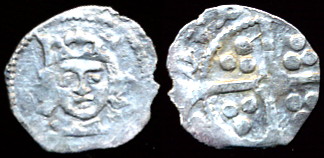 Late medieval Penny, badly clipped and currently unidentified. |
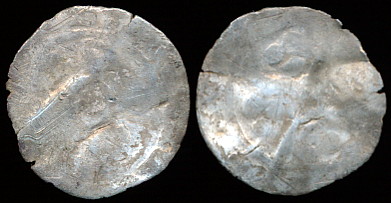 Worn Penny of Henry VI. |
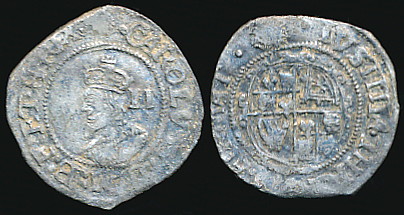 Superb Half Groat of Charles I, 1640. |
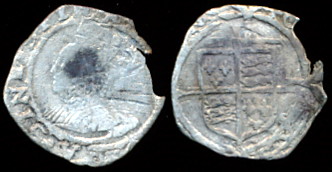 Small, clipped hammered Penny of Elizabeth I. |
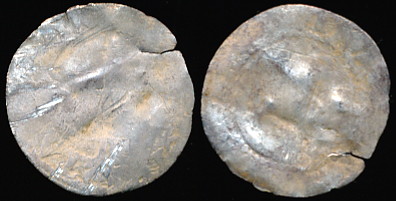 Worn Elizabethan Penny, possibly fifth issue, 1582-1600. |
.jpg) Excellent condition cut Farthing of Henry III. |
.jpg) Cut Half Penny of Henry III, voided long cross type. |
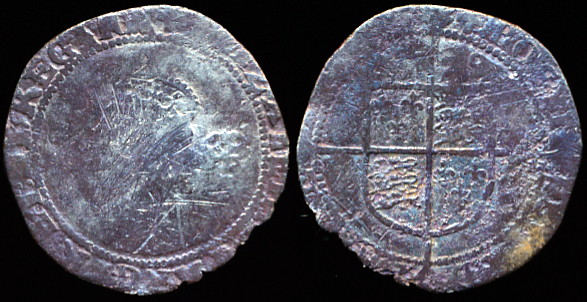 Sixpence of Elizabeth I. Mintmark Greek Cross, Tower mint, dated 1579. |
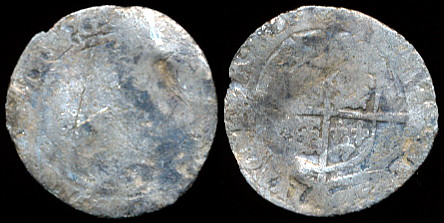 Half Groat of Elizabeth I. |

 What a nice little milled Sixpence of George II. This one's dated 1757 and was found on the edge of a field about 6ins down. |
 Its is unusual to find an Italian coin where I come from but it never ceases to amaze me. This coin is a small silver 5 Soldi of Napoleon dated 1811. |
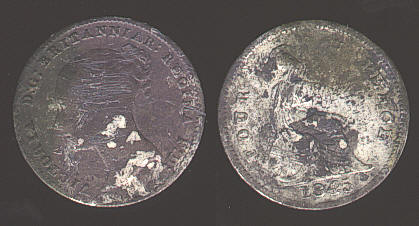 This is a nice Victorian Groat (4 Pence) dated 1845. Found only 4ins down. |
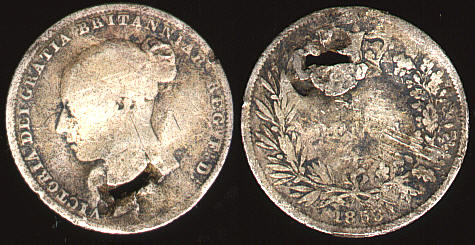 What a shame it is when you find a silver coin with damage like this. The hole has wrecked what would have been a reasonable Victorian Sixpence of 1853. |
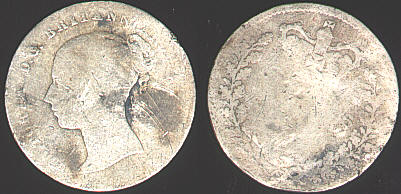 A Three pence of Victoria (Young Head type), date just readable 1866. |
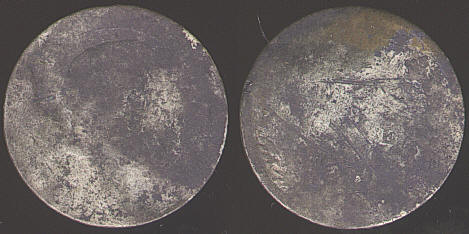 A Sixpence of Victoria (Young Head type) very worn. You can just see the top of the head on the left picture. |
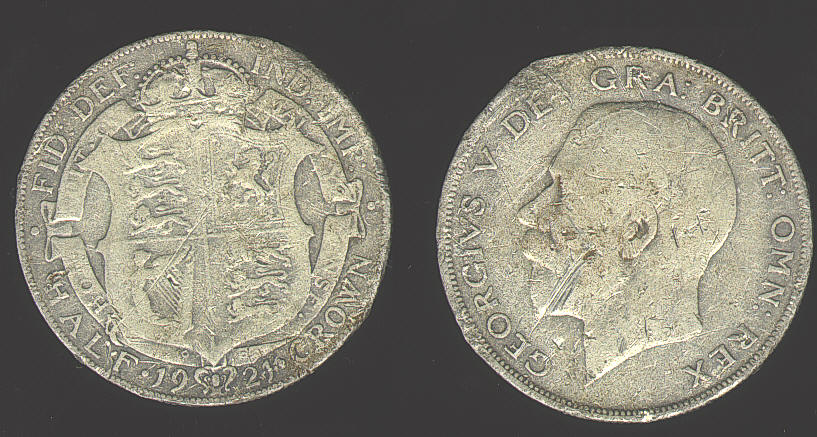 A Half Crown 1921 of George V. (500 Fine Silver.) |
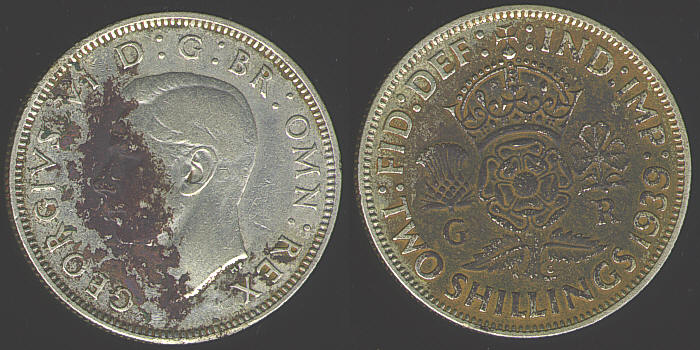 Two Shillings or Florin 1939 George VI. (500 Fine Silver.) |
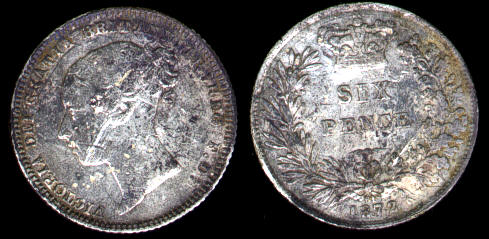 Yet another Sixpence of Victoria, this ones dated 1872. |
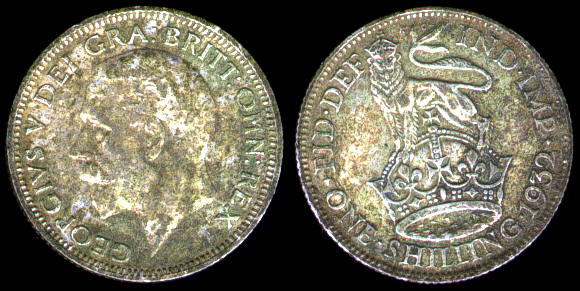 My First Shilling! This one's of George V dated 1932 and is made of 500 Fine Silver. |
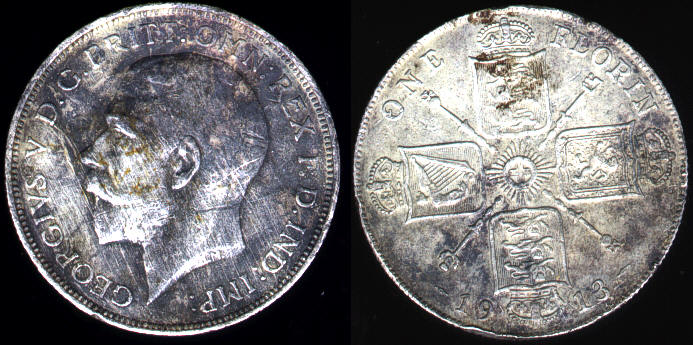 The only find of a hard days work! This is a Florin of George V 1913. (Scares date.) |
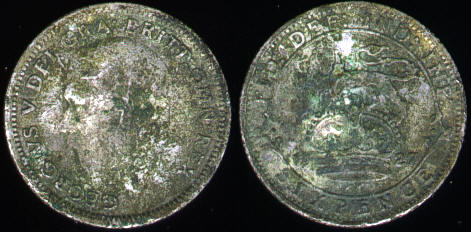 A George V Sixpence 1927. |
 An almost mint condition Shilling of Queen Victoria. Date 1883. |
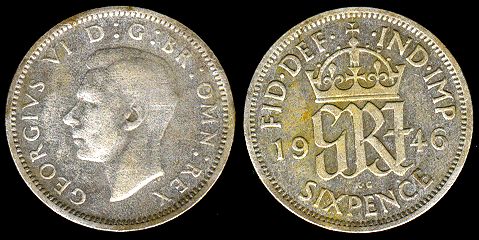 1946, the last year that the regular issue Sixpence or any other English coin contained silver. |
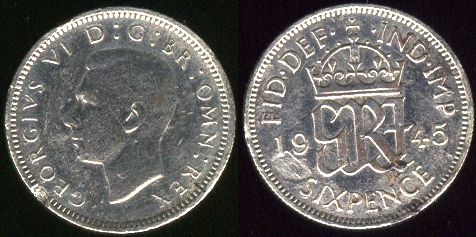 This Sixpence was in a real state when I found it, but a quick clean soon revealed the hidden detail. |
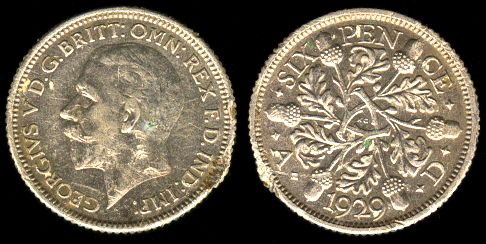 Another Sixpence, this time George V 1929. |
.jpg) Another Sixpence of George VI. This is the second one I have found dated 1946. |
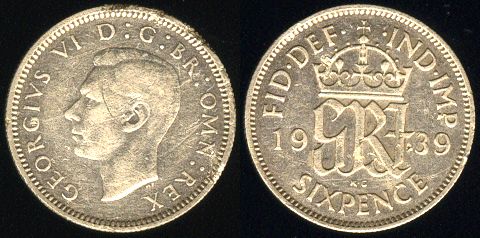 George VI Sixpence 1939. |
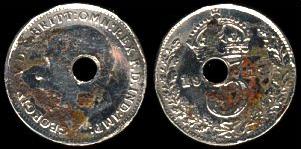 When I found this Threepence it looked as though it had been used as a washer for something. It took a lot of time and effort removing the scrap metal which had been clamped around it. |
 Another Florin of George V. This time dated 1923 and made from 500 fine silver. |
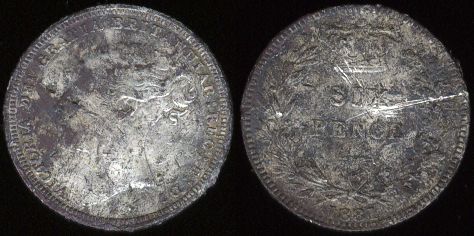 A Victorian Sixpence 1881. |
 A George V Shilling 1922. |
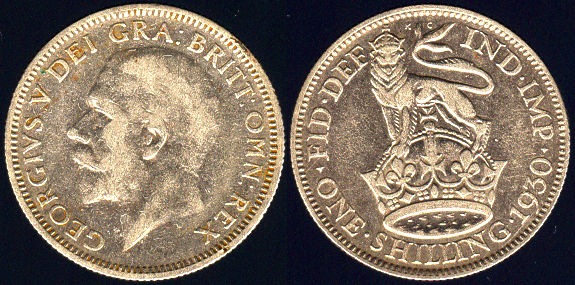 A George V Shilling 1930 and in good condition. |
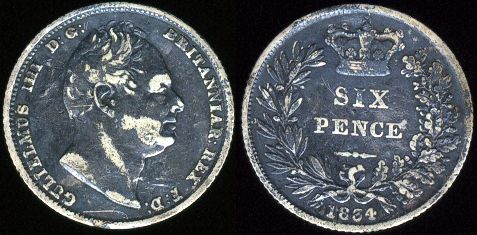 This Sixpence dated 1834 came from the middle of a pasture field. So far it is the only silver coin I've found from William IV's Reign. |
 A Sixpence dated 1874 with die number 50 just visible above the date letters. |
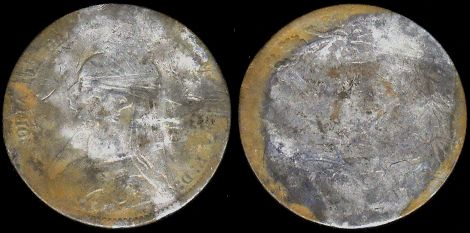 A very worn Jubilee Head Sixpence of Victoria, dates between 1887 and 1889. |
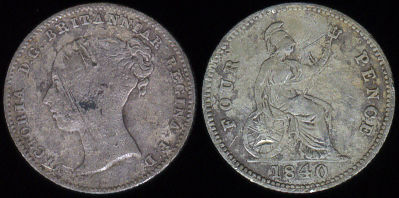 A Victorian Groat dated 1840. These coins are very small and hence are extremely difficult to detect. |
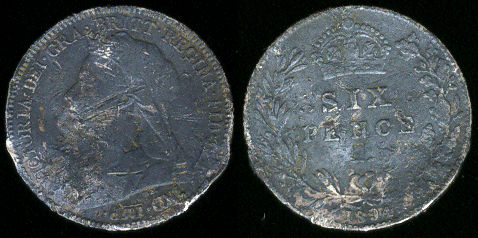 An Old Head Sixpence of Victoria 1894. |
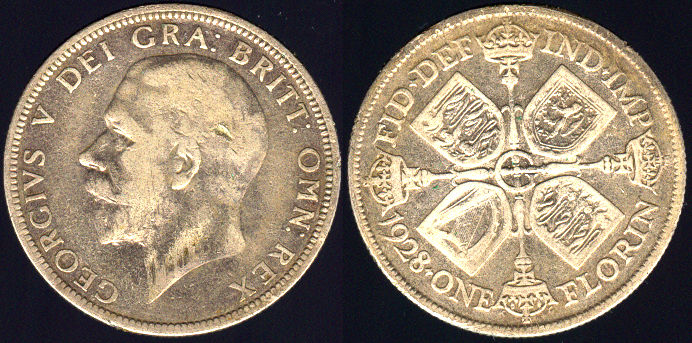 The third George V Florin (Two Shillings) I have found, this time dated 1928. |
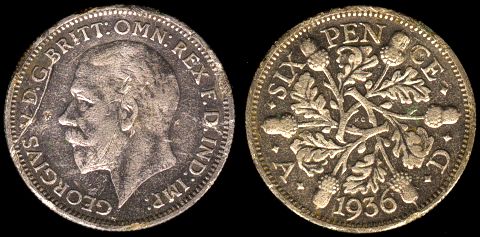 A Sixpence dated 1936. |
.jpg) A George VI Sixpence dated 1939. |
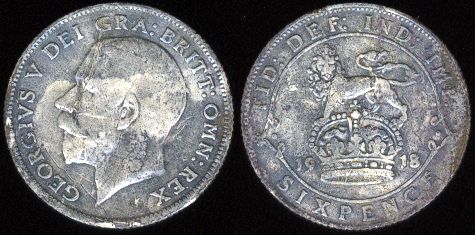 A nice Silver Sixpence dated 1918. |
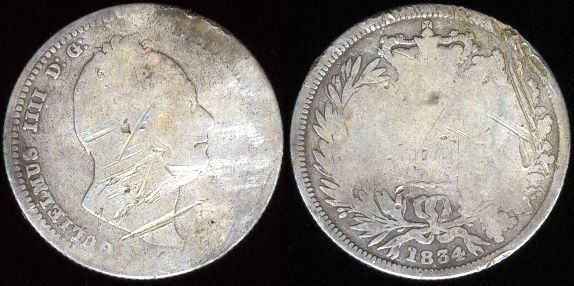 A Shilling of William IV. |
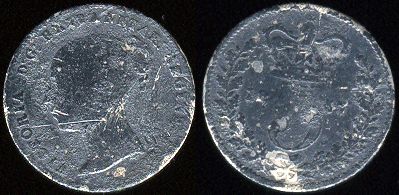 Threepence 1857. |
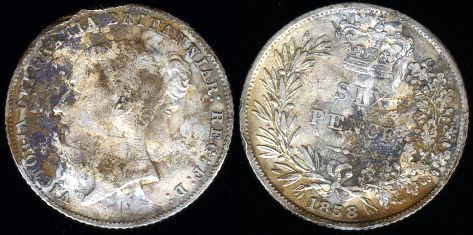 A nice Victorian Sixpence found with my new Exelerator II coil. |
 My first George III silver Sixpence. |
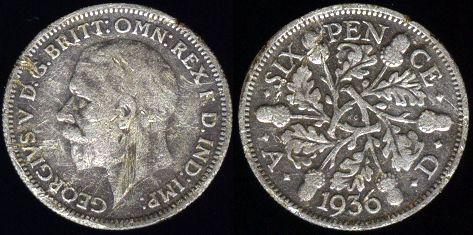 Another Sixpence, this time it's George V. |
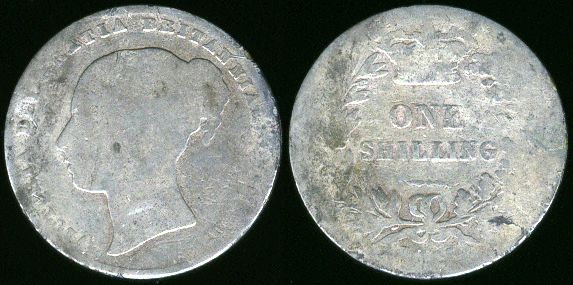 I got this Victorian Shilling whilst out on one of my local sites. |
.jpg) Sixpence 1945. |
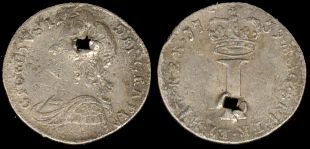 This dinky little George II Penny came up while on a club dig. |
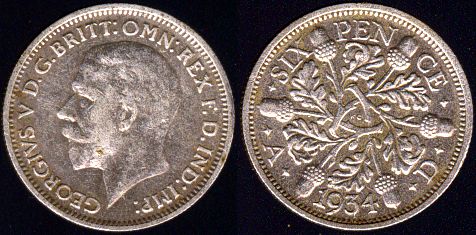 A 1934 Sixpence of George V. |
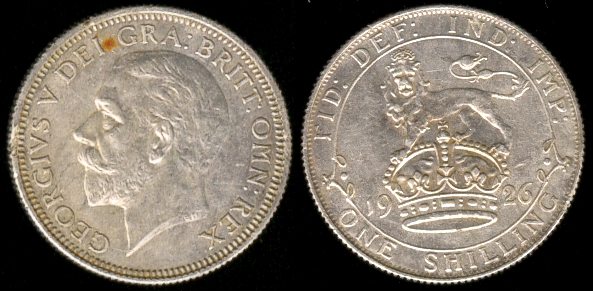 An almost mint George V Shilling which came up from an old footpath. |
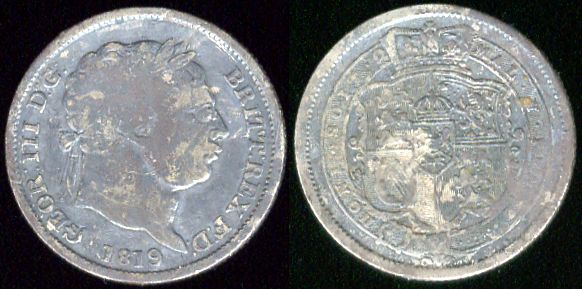 Always nice to come across a George III Bull Head silver Shilling. |
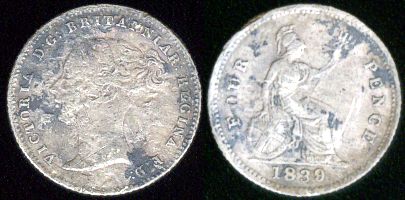 Another Victorian silver groat to add to the collection, this time dated 1839. |
 A nice Two Shillings or Florin of George V, 1929. |
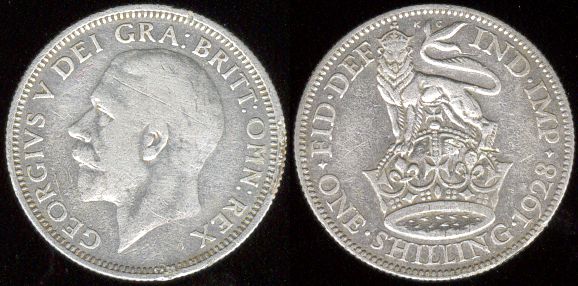 Always feels good to find a silver Shilling. |
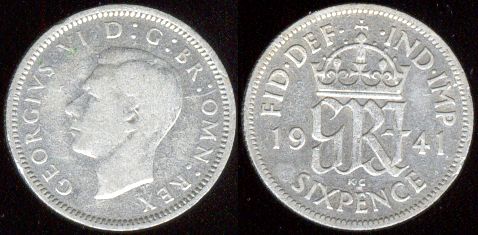 A silver Sixpence from the war years. |
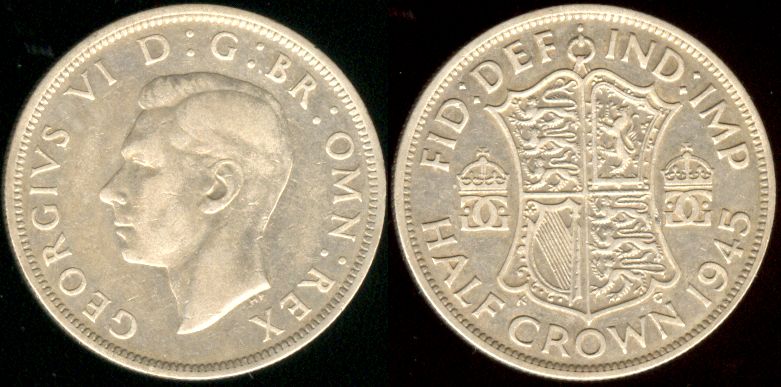 I always like to find these chunky milled silver Half Crowns. |
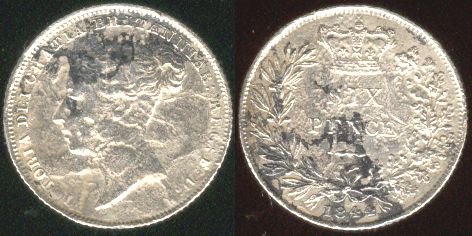 A shame this 1844 Sixpence was so corroded when I found it, must have been almost new when somebody lost it. |
 Sixpence dated 1942. |
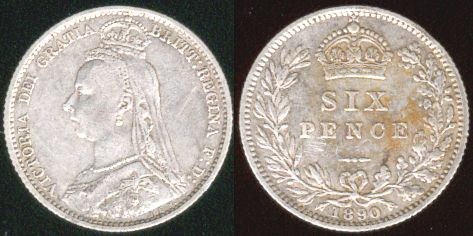 This Victorian Jubilee Head Sixpence can only be described as a little gem and almost completely uncirculated, date 1890. |
 1928 Sixpence of George V. |
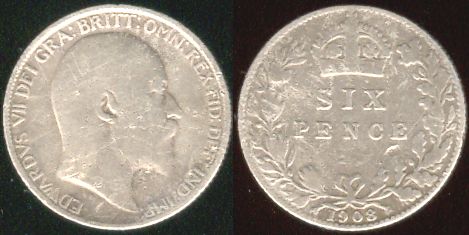 My first Silver Sixpence from the reign of Edward VII, a quick clean really did this one justice. |
.jpg) The second Threepence I’ve found dated 1866. |
.jpg) A very worn Young Head Sixpence of Victoria. |
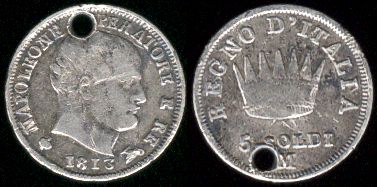 Another Napoleonic coin from Italy. |
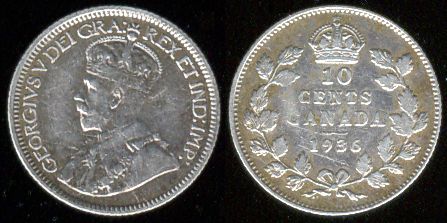 This Canadian coin came from a site owned by my previous employer. |
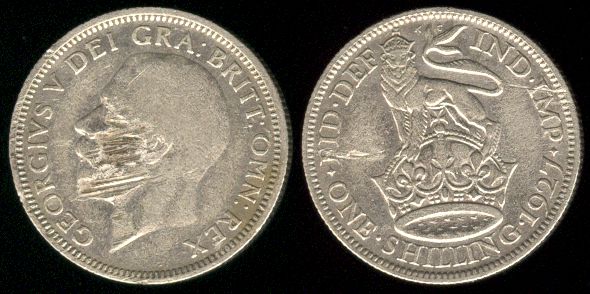 One Shilling 1927. |
 A worn sixpence dated 1885. |
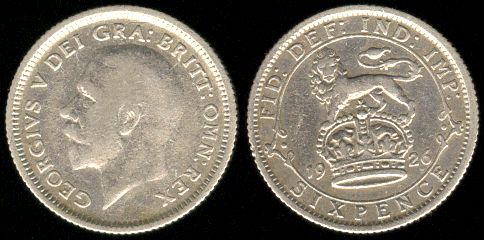 A George V Sixpence 1926. |
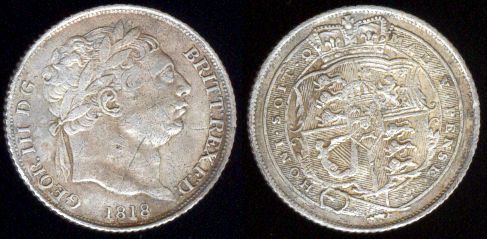 While out on a local site I found this stunning George III Sixpence. |
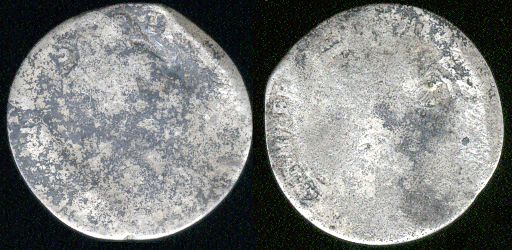 Poor condition William III Sixpence. |
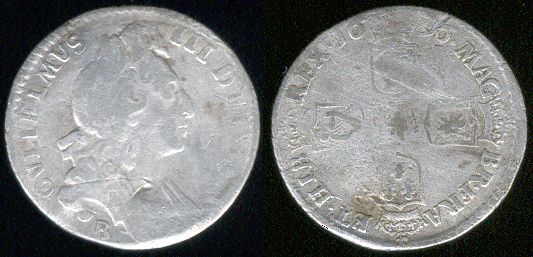 The small B below the bust of this William III Sixpence denotes the Bristol mint. Date 1696. |
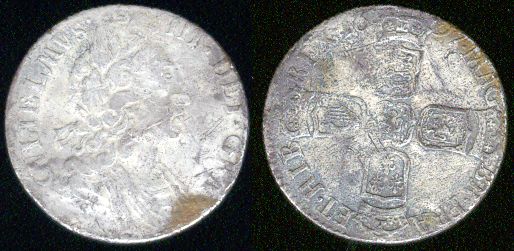 William III Sixpence 1697. |
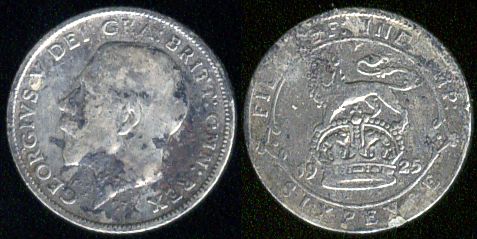 George V Sixpence 1925. |
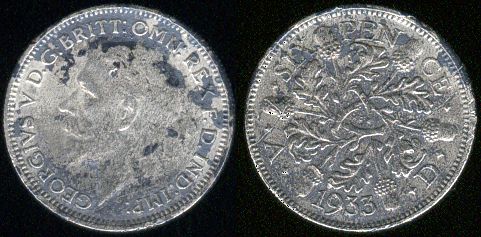 George V Sixpence 1933. |
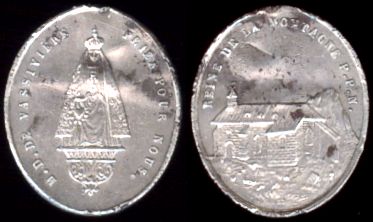 This oval coin has been difficult to research so if anyone can help then please let me know. It looks late 18th Century and probably of French origin. |
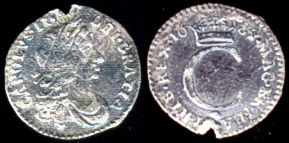 Tiny milled 1684 Penny of Charles II. These coins are usually found in Maundy sets issued as part of a religious ceremony on Maundy Thursday. |
.jpg) George V shilling 1922. |
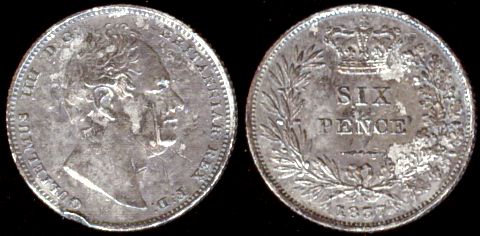 1837 Sixpence of William IV. |
.jpg) Superb Sixpence of George V. The condition of this coin is nearly mint, it doesn't get any better than this! |
.jpg) George V sixpence 1929. |
 Victorian Threepence that's seen better days. |
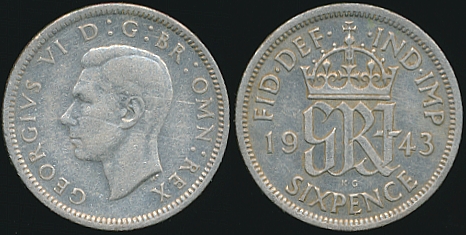 George VI Sixpence 1943. |
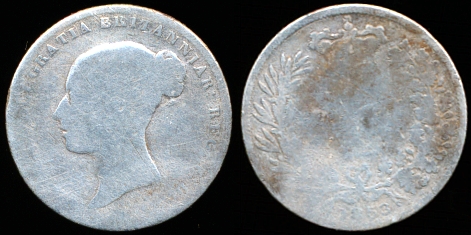 A very worn Victorian Sixpence. |
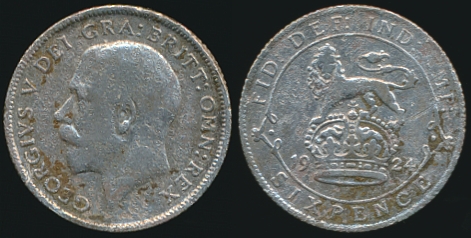 Sixpence of George V dated 1924. |
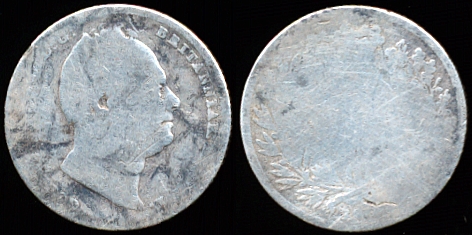 Worn William IV Sixpence 1830 – 1837. |
 A Maundy Groat of George III. Special coins are issued each year on Maundy Thursday by the ruling monarch to deserving senior citizens. A tradition dating back to the reign of Edward I. |
.jpg) Good condition Victorian Sixpence dated 1853. |
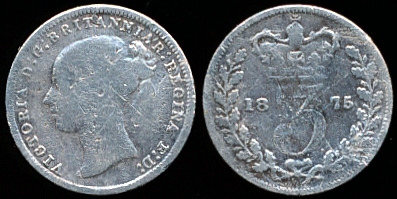 Silver Threepence 1875. |
 Sixpence 1917. |
.jpg) Sixpence 1946. |
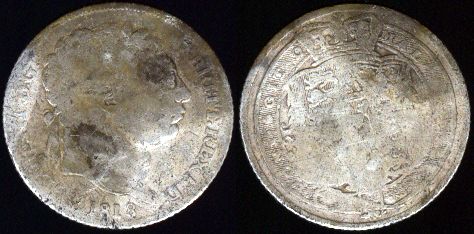
.jpg) Worn George III Sixpence 1818. |
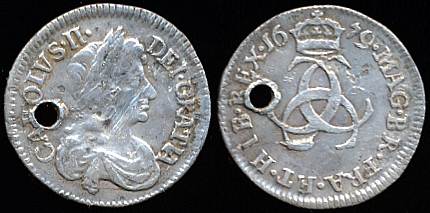 Holed Charles II Threepence 1679. |
.jpg) Small Victorian silver Groat 1845. |
.jpg) Battered Silver Sixpence of William III. |
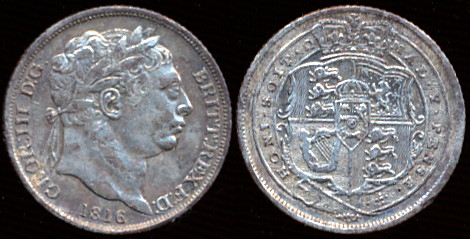 Nice condition George III Silver Sixpence dated 1816. |
.jpg) George III Silver Sixpence 1816. |
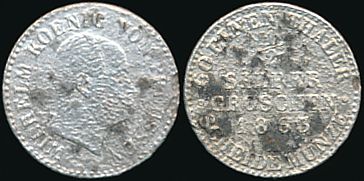 Interesting UK find! Prussian 1/2 Groschen of William I 1861 – 1888. |
.jpg) Nice Victorian Groat 1839. |
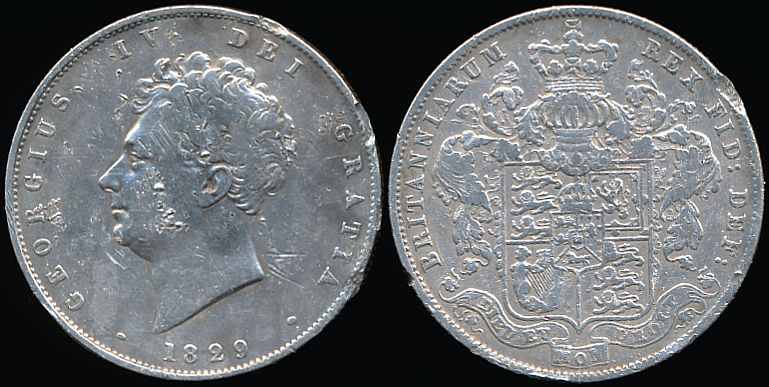 George IV Half Crown 1829. A rare date and great find! |
.jpg) William III Sixpence, almost worn smooth. |
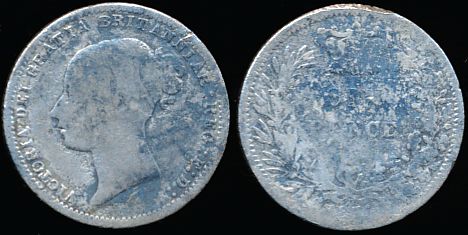 Sixpence 1876. |
.jpg) George V Sixpence 1928. |
 Hard to find George II Penny 1754. |
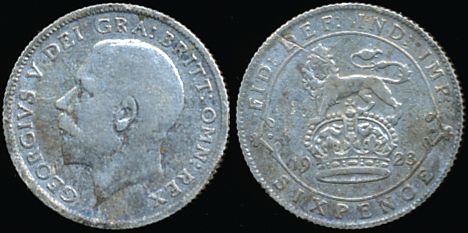 Sixpence 1923. |
.jpg) William III Sixpence in poor condition. |
 Worn sixpence of Victoria. |
.jpg) Victorian silver Threepence dated 1866. |

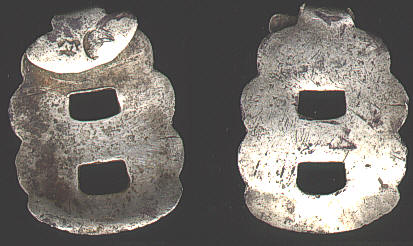 The end of a tiny sliver buckle or clog fastener (10mm x 7mm). Hallmarked W, other detail worn off. |
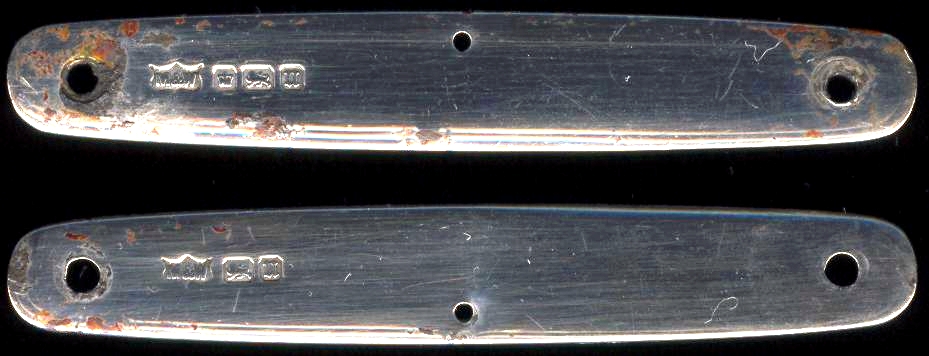 Here is what I think are two decorative plates that would have attached to the handle of an old penknife. The hallmarks indicate that the knife would have been made in Sheffield, 1937, by a manufacturer known as Mappin & Webb. Thanks to Paul Egan from the Weekend Wanderers for the information! |
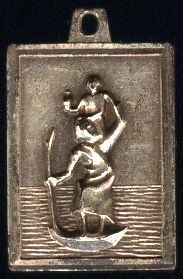 A charming silver necklace depicting St Christopher. |
 I like the design of this modern silver plated ring so I have chosen to show it on my finds page. |
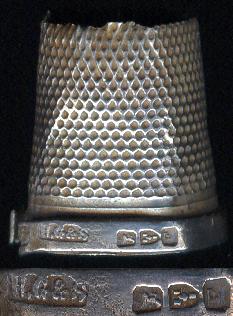 My First silver thimble. Paul Egan from the Weekend Wanderers Metal Detecting Club tells me that it was made in 1894. Thanks Paul! |
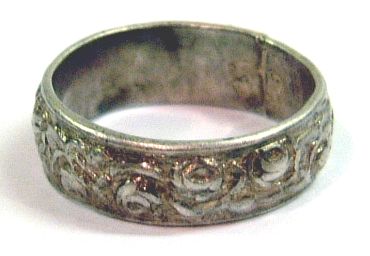 A silver ring dating to the 1960s and found on what was once a caravan site. |
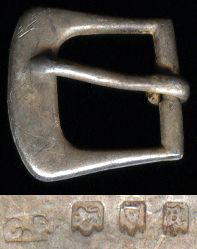 A very faint signal popped up this lovely silver buckle. Just shows you how easy it is to miss things. |
 A nice Victorian silver locket. |
.jpg) My first shot at detecting in a river yielded this nice modern ladies silver ring. I think its called beginners luck! |
 I believe this unusual item to be the bottom of a Georgian gentleman’s walking stick. By the style of the engraving and date letter hallmark I would say it dates to 1781-2. |
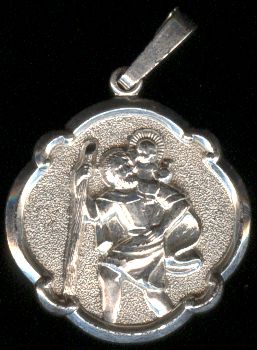 My second sterling silver St Christopher which came from local woodland. |
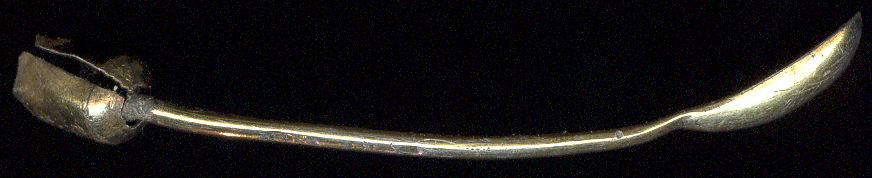 A small Georgian silver salt spoon. |
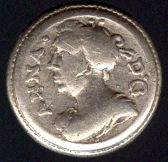 This curious silver stud depicts the bust of Queen Anne. I have no idea if it dates to the period and I guess I will never know. |
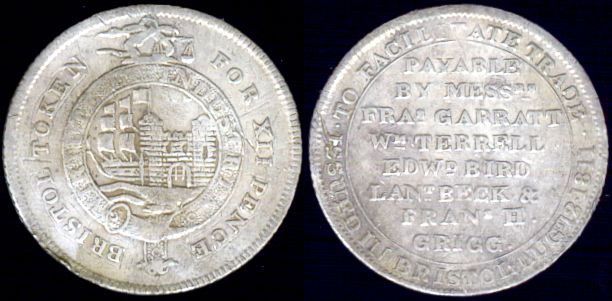 Unusual Georgian silver Shilling token. Obverse, FOR XII PENCE BRISTOL SHILLING. Reverse, TO FACILITATE TRADE : ISSUED IN BRISTOL AUG 12 1811. |
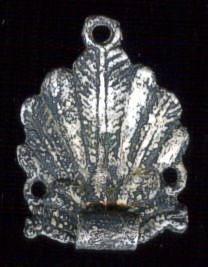 Elaborately decorated silver clog fastener, probably late 18th Century. |
 Nice silver thimble. I don’t get many of these! |
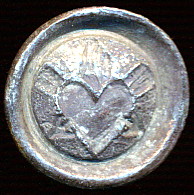 Small silver button fragment with heart design. |
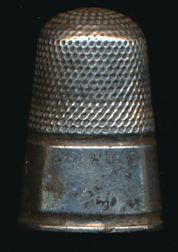 Large Victorian thimble. |
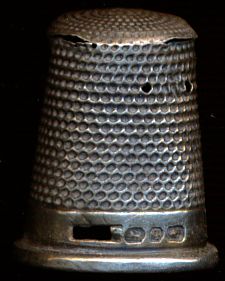 Late Victorian thimble. |
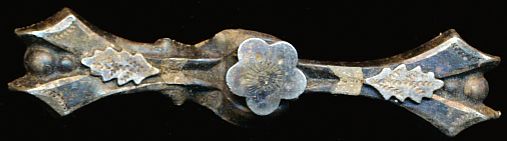 My first silver brooch. Probably dates to the early 20th Century. |
 Elaborately engraved Georgian to Victorian era silver button. |